
Novel Trios: New Recommendations

Below are book/novel recommendations grouped in themed trios, given classifications that tie them together, brief descriptions of what you can expect, and the overall opinion that these are novels I absolutely adore and think other people should read as well.
The Margaret Atwood trio
There is an entire shelf in a bookshelf here with me at home dedicated almost entirely to Margaret Atwood. Aside from a few other novels tucked to one side, I own a wide assortment of Atwood’s work, and you could certainly go as far as saying she is the author I have both read the most of and have learned the most from as a writer and big-dreamer myself. I think the obvious recommendation from her sticks out plain as day—everyone knows The Handmaid’s Tale to some degree, whether having read it or noticed the television show ran for an aggressive amount of time far exceeding how small the novel is. You don’t need me recommending a novel everyone knows. You need me talking about the overlooked choices you might not know about.

The Blind Assassin
by Margaret Atwood
Iris Chase is at the pinnacle of her life—like any elderly woman, she begins to write her memoirs, a sprawling historical recount from her conception through her adolescence alongside sister Laura, to her marriage to businessman Richard and her own motherhood. But The Blind Assassin is like an onion. Alongside recollections of her past, there are chapters of the titular novel released after the death of Iris’ sister Laura, found amongst her things. This novel, depicting a complicated affair with a writer who spins a science-fiction tale about a blind assassin on another planet, is simply another layer to a complicated work of art.

The Year of the Flood
by Margaret Atwood
While this is the second novel in a trilogy, I will always argue The Year of the Flood is as accessible an entry point as Oryx and Crake is. This sequel follows Toby and Ren, two young women adjusting to a world changed by the events explored in the first novel of the trilogy. Whether you have the entirety of the context is entirely up to you. The Year of the Flood imagines what the future could look like, a future entirely different from what Atwood imagines in The Handmaid’s Tale, but equally upsetting, horrific, and darkly dystopian.

The Robber Bride
by Margaret Atwood
Inspired by the fairytale The Robber Bridegroom, this modern interpretation sets Zenia as the titular villainess, inserting herself into the lives of Charis, Roz, and Tony, three women whose willingness to become friends with such a gorgeous devil meant losing their men, their joy, and their peace to her. It is not so simply a women-on-women crime novel, but a complex, rich underpinning of how human beings are capable of robbing each other blind in broad daylight.
The Toni Morrison trio
As a white man, there is a lot I can learn from a black woman. When I read Toni Morrison, I understand the importance of reading outside what is known to me, outside my own history and culture as a queer white person. Understandably, Toni Morrison garners a lot of attention without the white boy having to talk about the importance of her work, but I could not necessarily talk about my favourite books and leave off an author who continues to impress me. Much like Margaret Atwood, the expected recommendation—Beloved—is passed over for other works I believe deserve just as much attention and praise. Although, please, I insist you still read Beloved. There is a reason why it is so, well, beloved.

Sula
by Toni Morrison
At the core of Sula is the friendship between Nel and Sula, Black women who grew up alongside one another. An entire decade has passed since Sula ran away to pursue her big ambitions, and Nel never left the town they grew up together in, marrying, settling down. Their differences, now, all these years later, drive what becomes of their reunion.

Love
by Toni Morrison
Bill Cosey has such a profound effect on women—May, Christine, Heed, Junior, Vida, and L are all affected by him in some way, shape, or form, which is complicated, because he is a man who thinks himself more immortal than he is. The beauty of a novel like this, wrapped in so many perspectives, is how important Morrison considers these women to all be to Bill Cosey.

A Mercy
by Toni Morrison
A more recent read for me—Florens is welcomed into the household of a Dutch settler and his wife as a slave, bought to settle a debt owed by another settler. She joins the household’s two other acquisitions: Lina, a Native American woman, and Sorrow, pregnant and flighty and having once been rescued from a shipwreck. Toni Morrison provides a well-researched account of what it meant to be a Black girl in the seventeenth century.
You Ought to Be Human trio
A zanier assortment of books, these are novels in which a central character takes on the personified traits of a human being but is, well, not necessarily one. Typically an animal of some form, there’s a bit of an animated-classic vibe to these works of fiction. Whether or not there is happiness, bright colours, and rainbows is entirely a different question. But one of the main characters ought to be human. They really should be. But they are not, and that is troubling, or worrisome, or bleeds into the entire essence of why this very book was written after all.
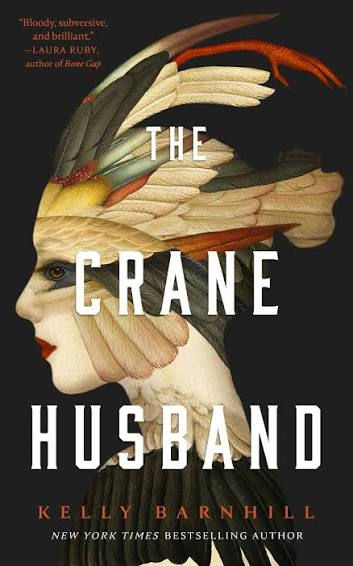
The Crane Husband
by Kelly Barnhill
A fifteen-year-old girl’s mother becomes enamoured with a crane, and she must adjust to having a new stepfather who is a literal bird, feathers and all. It is a retelling of The Crane Wife, which I have never read and did not know of until after I finished reading this.

Tender Morsels
by Margo Lanagan
Another retelling, this time of the Snow White and Rose Red fairy tale, in which two girls raised by their elderly mother forge a friendship with a friendly bear in the woods. Except the bear is secretly a human man, and magic swirls around in the forest, and all is not what it seems.

The Changeling
Apollo Kagwa’s wife and newborn child are gone. Reckoning with his new reality, his wife’s seeming belief that their child was wrong, like the stories of swapped babies and the wicked fae, Apollo commences on a perilous journey to uncover the truth about his family.
Women Deserve to Lie a Little trio
It is certainly an opinion shared by many that a woman should be granted the opportunity to lie a little because of what she has to endure in life, whether it be men, children, or taxes. This small collection of novels hinges on women who transform tiny little lies into gargantuan deceptions for the sole purpose of making their lives a little bit more bearable, and for that, I forgive and I forget to have an ethical conversation around whether their decisions will have prolonged effects on their futures. The women in these novels deserve a little deception, like a slice of cake after dinner.

Diary of a Void
by Emi Yagi
A woman realises the benefits of pretending to be pregnant. A concept so simple, set in Japan and translated to English, executed so brilliantly as Yagi’s debut novel. Ms Shibata has full-time employment, a stable-enough life, but is desperate more than anything to be treated with a little more respect. So you have to pretend to be pregnant. So what.

The Honeyeater
by Jessie Tu
Fay, a translator working alongside her mentor at a university in Sydney, masks the secret of her affair with her mentor’s husband and pretends his death shifts absolutely nothing in the paradigm. Offered the opportunity to work on an important, career-altering translation, Fay just needs to get comfortable keeping the affair beneath the surface. [Also it is important to support Australian authors.]

The Lost Daughter
by Elena Ferrante
Leda is on vacation by the sea, shaken by flashbacks to when her daughters were younger and she abandoned them for a time to re-experience what it was like to be a free woman. The reason for the resurgence of these feelings: the relationship between a mother and daughter also holidaying by the sea, and a missing doll. The Lost Daughter was adapted into a film starring Olivia Colman and I maintain it is a perfect adaption of the source material, and Colman is brilliant as Leda.
Mental Health Awareness trio
Naturally, as someone who deals with their own mental health problems, reading about other’s sufferings makes me feel both seen—and understood—but also even more miserable in my plodding-along path towards whatever the future holds. Seeing yourself in something you read is usually reserved for like, having the same opinion on which season of the year is your favourite, or how a character goes about ending a toxic relationship. Less so how often they think about killing themselves. Or the morbid fantasies they have, or the painfully-toxic thoughts about their own existence they have. But for those thoughts, there are relatable novels that made me more deeply understand how not alone I am in this world.

The Bell Jar
by Sylvia Plath
Someone recently called this novel boring and slow and tedious, but I disagree. Sylvia Plath’s loose adaptation of her own life, and therefore her own struggles with mental health, were at least an uncomfortable depiction of a woman struggling to position herself in a world that expected much more from her. She details various suicide attempts and thoughts around suicide. This novel came to me when I needed it to, and it is gorgeously written.

My Year of Rest and Relaxation
by Ottessa Moshfegh
There is much time spent in this novel detailing the groggy machinations of a woman determined to sleep away her entire year, a rather bizarre choice of book to read while I was travelling by train through the very heart of Australia. The nameless narrator can at least afford to quit her job, hole herself away in her apartment, and treat her friend Reva questionably, or like an annoyance.

I Want to Die but I Want to Eat Tteokbokki
by Baek Sehee
If you know someone who is struggling with their mental health, reach out and check in on them. Baek Sehee’s conversations with her therapist cover an array of topics, including how she views her body, the relationships she has with other women, her desire for affection from me, and so on. These intimate, personal discussions can be difficult to read if you relate to the sentiments shared within them. But Sehee’s courage to share her thought patterns with readers, with like-minded souls, is incredibly important in a world that continues to be unstable to exist in.
Bottle Episode Books trio
A bottle episode of a television show is one set almost or entirely in the one location, typically to save on budget, then to tell a contained story with minimal characters and without changes in costume, hairstyling, etc. A novel hardly has to worry about the budget restraints of working on a set, and yet, these three novels restrict themselves for one reason or another. The reasons I consider these to be bottle novels might slip and slide along a scale, but the general concept is clear: instead of shifting between location to location, these novels have set up camp somewhere specific and defined these locations with the clarity of knowing they need not paint a hundred other pictures.

Piranesi
by Susanna Clarke
One of my absolute favourite novels of all time, Piranesi is set within the halls of the Great House, a seemingly-limitless labyrinth of rooms across three floors, almost mimicking layers of a world—the sky, the land, and the sea. Piranesi cannot remember how he got here, who he is, and what the path forward is, but he is frequently visited by the only other human he can remember coming in contact with, a man he calls The Other. These are his journals.

Women Talking
by Miriam Toews
A Mennonite colony is at odds, in simple terms. More specifically, more uncomfortably, the women of the colony argue whether to abandon their community or stay and wait after the discovery that several men—husbands, fathers, brothers—have been sexually-assaulting and raping the women in the night. Without true knowledge of the world beyond their closed-off community, the women spend the entirety of this novel in discussion in a hayloft, exposed to trauma.

We Have Always Lived in the Castle
by Shirley Jackson
The first novel by Shirley Jackson I ever read. Merricat and Constance live in the very house their entire family perished in years earlier, from poisoning, certainly not an unsuspicious death. The arrival of their cousin muddies the water, because the quickest way to upset the natural order of things is to introduce in a similarly suspicious man.
The Agatha Christie trio
Agatha Christie wrote an awfully-extravagant number of novels before she passed away and we lost one of the greatest mystery novelists of all history. Her ability to craft an unbelievably-believable mystery with twists, turns, and insane reveals remains unmatched. She even has a mystery of her own—that time she disappeared for a couple days and couldn’t remember she had gone. Everyone knows the absolute classics—Murder on the Orient Express, Death on the Nile, And Then They Were None—but not everyone is on a quest to read every Hercule Poirot novel like I am. Here, I offer you three of my favourites, for some reason or another.

The Murder of Roger Ackroyd
by Agatha Christie
The less you know of this novel the better. Roger Ackroyd is murdered for knowing too much—a well-worn idea in the murder mystery genre, but what exactly Ackroyd knew is what Christie teases out of her novel with a true deftness. The novel is told from the perspective of local doctor James Sheppard as he recounts the events of the murder and Poirot’s arrival on the scene.

Five Little Pigs
by Agatha Christie
The first Agatha Christie I ever read, and it has left an imprint. Five Little Pigs might be a more buried, more unknown Poirot story, about a crime re-examined sixteen years after the fact, but it was instrumental in building my now-adoration for Agatha Christie. A young woman turns to Poirot for assistance in clearing the name of her mother, who was convicted for the death of her father. There are five other potential suspects—the little pigs, if you will—who might not be so innocent as they seem.

Appointment with Death
by Agatha Christie
I have no clue what endeared me so much to Appointment with Death, a murder victim so incredibly heinous and miserable you will likely cheer when they bite the bullet. Hercule Poirot is in Petra, travelling amongst the Boynton family and an assortment of equally-intriguing personages when Mrs Boynton, insufferable, controlling, an all-together awful mother, is found dead in a chair, as if surveying her kingdom. Whodunnit?
Conservation Efforts, #SavetheAnimals trio
As someone who spends an unmeasurable amount of time rattling away about the importance of conservation efforts across the globe, the importance of accredited zoos that prioritise these efforts, and the education of guests, and the welfare of animals in the care of trained zookeepers, it is only natural I find myself reading novels with similar themes splashed out across their pages. These novels specifically pride themselves on the concerns of creatures other than humans, and none of them are simply a “book with a pet.” There are serious discussions here around animals. They can even talk in one of them.

Turtle Diary
by Russel Hoban
Our protagonists, kindred spirits in their passion for the freedom of animals, plot to steal and release a sea turtle from the aquarium in London Zoo. There are no longer any sea turtles at the zoo, which I visited last year, so potentially this tale of the efforts of two passionate conservationists did some good in England, who can say.

The Rome Zoo
by Pascal Janovjak
Set in a real zoo about a fictional species of critically-endangered anteater, a zookeeper angles to keep the creature alive and thriving in captivity amidst the visit of an architect and the bold ambitions of the zoo’s marketing manager Giovanna. Set amongst vignettes to the zoo’s history and the political background of Italy, the novel weaves stories and makes you invested in the human beings wandering the grounds as much as the animals living in the enclosures.

Wicked: The Life and Times of the Wicked Witch of the West
by Gregory Maguire
Everyone knows Wicked since the release of the two-part films, but my adoration still returns to the novels, specifically for now the very first novel in the series, a telling of the life of the Wicked Witch of the West, here known as Elphaba. Her devotion to the rights of lower-case animals and upper-case Animals alike, a definition becoming blurred by the politics of Oz at the time, cements Elphaba as an activist. The novel is in a very many ways different to the musical and the subsequent films, so leave any expectations for “Defying Gravity” in writing at the door.
Queer in Unexpected Places trio
Queerness is typically the centre of what I write, but not necessarily what I read—I like to look at it like writing is an expression of my lived experience and the crossover beyond it, but reading is where I get to expand out on my knowledge and learn and experience things I am not necessarily privy to. That being said, of course, queerness and the queer experience can peek itself out from a corner I might not have expected it to be. Be it a ski lodge, an ancient history museum, or a penitentiary for troubled young men. Sometimes the queerness finds you.

Class Trip
by Emmanuel Carrere
A young boy goes on, well, a class trip to a ski lodge and dons his Nancy Drew-style detective hat when a local child goes missing. He also fantasises a little about one of the instructors, a handsome adult man, which caught me incredibly by surprise. Class Trip is not advertised to contain this undertone of queerness, and it is a true undertone, but now you know about it.

When the Museum is Closed
by Emi Yagi
Emi Yagi’s second novel (and second on this list, too) is about Riku Horauchi, who is tasked to speak in Latin to a statue of the goddess Venus—Aphrodite—when the museum is closed on a Monday. What follows is the startling revelation that the statue of Venus is alive, can speak, express her memories, and might be a bit of a queer icon. The growing bond between woman and statue kept me engrossed while I travelled around Europe last year.

Eileen
by Ottessa Moshfegh
Eileen Dunlop lives with her drunken, disorderly father and works at the local penitentiary as a depressed, repressed secretary where she meets psychologist Rebecca Saint John. In the film adaptation, Rebecca is played by Anne Hathaway, so every time I pictured Rebecca while reading this novel, I saw Hathaway, and it is hardly impossible to believe Eileen could be so mesmerised by such a woman. Read Eileen if you are looking for a main character who loves going into specific, haunting detail about every aspect of her charmed life.
In the Mood for Heavy Emotions trio
For someone who loves to talk about his emotions, it was inherently a no-brainer for a category: the type of novel that leaves you incredibly vulnerable and weak at the knees, sobbing or otherwise with glazed-over eyes, staring off into the distance. These novels made me personally confront the heavier emotions associated with them, but everyone’s experience with a novel is different. These might simply be markers for whether or not you have a heart inside that chest of yours.

The Memory Police
by Yoko Ogawa
The people of an isolated community have been losing their memories over time—their recollection of what a certain item means, its uses, and the feelings and emotions attached to it. In this dystopian novel, certain people seem blessed—or cursed—with the ever-present ability to remember everything, which the governing body, a militia without regulation, deems to be destructive to a people who are supposed to forget.

I Who Have Never Known Man
by Jacqueline Harpman
Underground, isolated to the world, thirty-nine women are prisoners inside a cage, given little to eat, dressed in rags, treated with disinterest and disrespect by the male guards who pace around the prison. None of the women can know whether the world outside remains, waiting for them to return to it, but their determination to free themselves is more important than their questions.

Never Let Me Go
by Kazuo Ishiguro
Kathy, Ruth, and Tommy have their futures written for them since the moment they are born. They are to grow up, attend one of the many boarding schools with other children whose futures are mapped out, become Carers for a time, and then become Donors. They have no freedom to decide a career they might like. What do you do with a life if the decisions are made for you?
Witchcraft, Satanism, and the Occult trio
The supernatural drips through what I consume. I consume magic, blood, the glow of the moon, and the ectoplasm of some ghosts here and there. There is something thrilling about a spooky tale, and before you are three novels that harvest the grim lore of a twisted world I might merely wish existed. I want witches, I want the possession of demons, I want something more sinister beneath the surface than simply bigotry and depressing rage. Instead of wandering into a darkened hall and confronting secrets of the occult for myself, there is something quite magical about seeking them out in a novel instead.

The Daylight Gate
by Jeanette Winterson
In 1612, women are being accused and accusing one another of being witches. Alice Nutter is accused of harbouring witches in the tower she lets to the family of Old Demdike, a batty witch. Alice’s history is blurred, her age unknown, her prosperity known amongst the folk of Lancashire and Pendle Hill. She dares to involve herself in the politics of her time and question the men willing to curse out a woman as a witch while they in the same breath torture, abuse, and hunt down a supposedly-treacherous deserter.

Rosemary's Baby
by Ira Levin
Rosemary and Guy Woodhouse move into an apartment building, determined to start their life together as newlyweds and have a child. Anyone who knows at least the mythos of Rosemary’s Baby knows she inevitably finds herself pregnant with a baby not altogether as expected as it should be—there is a seedier underbelly to the Bramford Rosemary must now stomach. Ira Levin’s classic novel remains relevant to pop culture and is worth a read.

My Best Friend's Exorcism
by Grady Hendrix
The film adaptation might have disappointed me, but Grady Hendrix’ novel—the only novel here I no longer own, because someone borrowed my copy and never returned it to me and now we no longer talk or have any contact with one another—pairs the classic demonic possession with teenage girls acting anything but ordinary. One of the main characters is a girl named Glee. You want to read what happens to Glee.
I hope you find something new to read, to love, to obsess over like I do.
Keep reading.
Keep loving to read.
Stay bookish.
Keeley


Comments